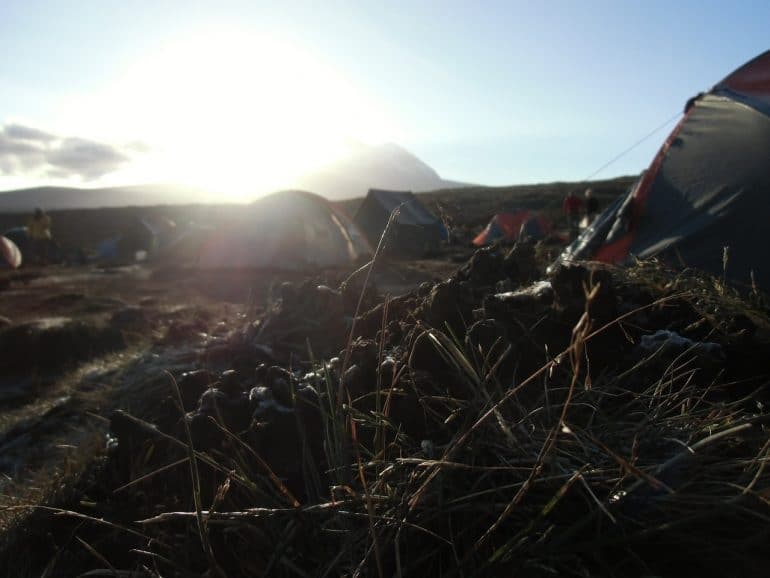
Kilimanjaro tends to dominate the conversation about trekking in East Africa. It’s the famous one, the bucket-list summit, the mountain that shows up in documentaries and daydreams alike. But just west of it, often overlooked by first-time visitors, Mount Meru offers something rarer: a climb that feels more intimate, more dramatic, and in some ways more alive.
If Kilimanjaro is the headline act, Meru is the brilliant sibling that never needed the spotlight to prove its worth.
That difference begins with atmosphere. On Kilimanjaro, you’re joining a well-established procession. On Meru, the trail feels quieter from the outset. The mountain rises out of Arusha National Park, and that changes the tone of the trek immediately. You’re not just hiking toward a summit; you’re moving through a functioning ecosystem where buffalo, giraffe, warthogs, and colobus monkeys are part of the experience rather than a distant possibility.
A Trek Where the Wild Still Feels Close
One of Mount Meru’s defining qualities is that it doesn’t ease you gently into the idea of wilderness. It drops you into it.
The Approach Feels Less Managed, More Immersive
Unlike Kilimanjaro’s busier routes, Meru begins with an armed ranger escort because the lower slopes are home to wildlife. That detail alone shifts the psychology of the climb. You’re not simply counting elevation gain or pacing yourself for altitude. You’re paying attention to movement in the grass, listening for calls in the forest canopy, and sensing that you’re passing through terrain that belongs, first and foremost, to nature.
That richness continues as the mountain changes character. The lower forest gives way to heath and moorland, then to a spectacular alpine zone shaped by lava, ash, cliffs, and crater walls. Meru feels geologically dramatic in a way that surprises people expecting a warm-up mountain. The ridges are sharp, the views expansive, and the crater itself gives the landscape a raw, unfinished quality.
By the time trekkers start researching what a proper volcanic peak trekking experience in Tanzania actually looks like, many are struck by how different Meru appears from the region’s more publicized climbs. It has the altitude, the volcanic character, and the summit challenge, but without the same sense of traffic or predictability.
The Climb Has More Texture Than People Expect
Mount Meru is sometimes framed as Kilimanjaro-lite, usually because it’s lower and often used as an acclimatization climb. That description misses the point.
Meru Isn’t Just Preparation. It’s a Serious Mountain in Its Own Right
At 4,566 meters, Meru is hardly a casual hike. The summit push begins around midnight, much like Kilimanjaro, but the route feels more varied and in places more exposed. The final ascent along the crater rim has a striking sense of drama, especially at first light when the landscape turns gold and Kilimanjaro appears in the distance above the clouds.
That visual relationship matters. Few summit experiences in Africa offer such a compelling view of another iconic mountain. From Meru, Kilimanjaro doesn’t feel like a rival. It feels like a giant neighbor across the horizon, reminding you just how vast and volcanic northern Tanzania really is.
Meru also rewards trekkers who enjoy movement through changing terrain rather than simply enduring a long upward grind. The route asks for attention. There are ridgelines, ash slopes, forested stretches, and moments where the mountain feels genuinely rugged. It’s less about joining a conveyor belt to a famous summit and more about engaging with the shape and mood of the mountain itself.
Why Many Trekkers End Up Preferring the Experience
This is where Meru quietly wins people over. Not because it’s “better” than Kilimanjaro in some absolute sense, but because it offers a kind of experience that’s getting harder to find on globally famous peaks.
Fewer Crowds Change Everything
When trails are less congested, you notice more. You hear the wind. You settle into your own pace. Conversations feel less fragmented, sunrise feels less staged, and the mountain has room to reveal itself gradually.
That can make Meru feel more personal. There’s often a stronger sense of being part of a small expedition rather than one group among dozens. For experienced hikers, that can be the difference between a memorable climb and a merely successful one.
A few things stand out repeatedly for trekkers who choose Meru:
- the abundance of wildlife on the lower slopes
- the dramatic crater and ridge scenery
- the quieter huts and trails
- the excellent acclimatization value for those continuing to Kilimanjaro
Even that last point deserves nuance. Yes, Meru is often used to prepare for Kilimanjaro, and for good reason. Spending several days climbing to over 4,500 meters before attempting Africa’s highest peak can make a meaningful difference. But it would be a mistake to treat Meru as just a training ground. Plenty of trekkers finish the climb feeling they’ve had the more emotionally resonant mountain experience already.
Meru Appeals to a Different Kind of Ambition
Kilimanjaro often attracts people chasing a landmark achievement. That’s understandable. Meru, by contrast, tends to attract travelers who value texture over prestige.
It Rewards Curiosity More Than Box-Ticking
There’s something refreshing about climbing a mountain that doesn’t constantly announce its importance. Meru reveals itself slowly. It asks you to be present rather than performative. And because fewer people arrive with fixed expectations, the mountain has more room to surprise them.
For photographers, naturalists, repeat trekkers, or anyone slightly wary of crowded classic routes, Meru can feel like a better fit. It still delivers the altitude, the dawn summit, and the high-volcanic drama people come to Tanzania for. It just does so with a little more subtlety and a lot more silence.
That may be why the mountain lingers in memory so strongly. Kilimanjaro impresses. Meru gets under your skin.
The Mountain You Notice More Deeply
Mount Meru feels like Kilimanjaro’s quieter, wilder sibling because it offers many of the same elemental rewards—height, hardship, volcanic beauty, sunrise triumph—but in a setting that feels less curated and more immediate. It doesn’t ask to replace Kilimanjaro. It simply reminds you that fame and depth are not the same thing.
If Kilimanjaro is the mountain people talk about before they go, Meru is often the one they keep talking about after they return.
What say you?
Thoughts on Mount Meru?
Let’s hear it!