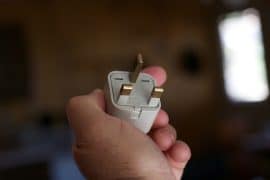
Today’s list of what’s on the must take or pack list has changed considerably in the past ten years. Unlike the passport, comfortable walking shoes, and universal adapters, what you need now is a smartphone. It is our map, the translator, our bank, our first link to home. But, when crossing borders, the experience can be frustrating, for instance, queuing up at overcrowded airports, or having to deal with exorbitantly high roaming charges.
Smart travelers can use all-encompassing communication sites such as GetTempNumber.com and get SMS verification via this service optionally. It will be expanded to include personal use of dedicated virtual numbers, granting a personalised layer of digital flexibility to go with that class of plastic SIM card. Enabling a virtual number on your trip also means you don’t need to worry about your digital identity being lost whenever you wake up in various countries.
The Problem with Physical SIM Cards in Foreign Lands
The typical traveler’s tip for foreign visitors for a long time was to purchase a local SIM. This used to be a low-cost solution, but there are plenty of logistics problems. First, there’s the physical exchange of cards, and you could end up losing your little original SIM card. Secondly, countries require a lot of “know your customer” (KYC) documentation – they’ll need to see your passport information to access 5GBs of data.
There are Physical SIMs which are linked with hardware. However, if you’re hiking through Scotland’s highlands or visiting Vietnam’s limestone caves, and your phone becomes damaged, so does your number – and so does your access to the banking Apps that need an SMS to log in and access the service. The virtual services don’t go with the number – they go with you; when you get an Internet connection, you have your ID.
Enhancing Security and Privacy While Exploring
The aspect overlooked in traveling will surely be security. You run the risk if you connect to hotels’ or public Internet that you’re in areas with an abundance of Wi-Fi activity. Also, numerous travel Apps, ranging from regional ride-sharing services like Southeast Asia’s Grab to boutique hotel Apps, need a phone number to register for them.
Doing this with your true personal number is a recipe for spamming in the future. GetTempNumber can be used to give a “one-off” number for the above verifications. It means there is a protective barrier between you and all of the on-the-go digital services you would interact with. Even when there is a compromise of the database for a local application, your main number will still be protected.
Hacking into Two-Factor Authentication (2FA)
Two-factor authentication is the greatest limitation as far as long-term travelers are concerned. Most banks and credit card companies would SMS you a code to the number you’ve registered on their site if they notice you are logging in with a new IP address from a foreign country. You cannot obtain this code if you already have another local SIM in your mobile phone, since they are all different.
Using a virtual number service, you can get these important SMS codes on your web-based control panel. Thereby, you can use your local data SIM in your phone to use the Internet without having to pay any hefty rates; however, you can still get security codes from any bank back home via a virtual SIM.
Preparing for the Future of Virtual Residency
The need increases for a semi-permanent local presence as a way of dealing with travel, which is now more to live in a place than to foster just the act of visiting. Taking three to six months to travel within a country, many travelers are becoming “Slow Mads”. In such situations, you must have a separate phone number for neighbors and friends, deliveries, and landlords. The new GetTempNumber functionality will enable travellers to keep a continuity of local contact points without using a local contract.
Integrating Virtual Tools into Your Travel Stack
If you want to leverage your international work tour to the maximum extent, it is essential to create a unified “tech stack”. Typically, they will have a good VPN, a multi-currency bank account (such as Revolut or Wise), and a virtual number service:
- Bookings. For reservations, renting cars, etc., at restaurants, you don’t want to use your permanent, personal line; use your virtual phone number.
- Marketplaces. If you are purchasing a used bike or a surfboard with the local classifieds during your visit, then using a virtual number maintains a professional and private transaction.
- Emergency contact. Give your virtual number to tour operators, enabling them to contact you without international calling rates.
There’s even a green “side-sweep”. Millions and millions of plastic SIM cards are manufactured, wrapped, and then discarded by travelers yearly. More and more, we are on the way to virtual numbers and eSIM technology, thus entering the “dematerialization” of travel. This is just another way that we’re becoming more responsible and sustainable in our tourism. It is just a step towards more responsible and sustainable tourism – but a helpful one at that!
Travel Smarter, not Harder
The concept of being at home and away is merging in 2026. We hope that our digital life can seamlessly flow across the world with us. This is possible in part thanks to the services such as GetTempNumber, which provide a sophisticated solution to communication management, free of the straitjacket of physical hardware or threatening to the privacy of traditional roaming.
Before embarking on the next adventure, reflect on your digital approach! Connectivity has become more than a bar on your cell phone; it’s a matter of control, of your data, of your security, and of your accessibility. A Virtual Number ensures you are not a tourist, but a world citizen at a local touch point anywhere you travel.
What say you?
Thoughts on
The Digital Nomad’s Guide to Seamless Connectivity?
Let’s hear it!