Choosing where to stay in Milan can shape the entire experience of the city. For luxury travelers, the decision is rarely just about finding a beautiful apartment or hotel. Location matters just as much: being able to move easily between cultural landmarks, shopping streets, restaurants, and evening experiences can make a stay feel considerably more effortless.
For travelers who want to experience Milan at its most central, the area around Duomo, Piazza della Scala, and Cordusio is one of the strongest bases in the city. Brera follows closely for atmosphere and neighborhood character, while the Quadrilatero della Moda is the natural choice for those who want fashion and luxury retail at the center of their trip.
We also drew on the local experience of Heart Milan Apartments, which rents luxury apartments in the Duomo area, to better understand why the historic center works so well for travelers who want shopping, culture, dining, and major attractions within easy reach.
Duomo, Scala & Cordusio
For travelers who want Milan immediately outside their door, the area around Duomo, Piazza della Scala, and Cordusio is difficult to beat.
Its greatest advantage is not simply centrality, but the concentration of experiences available within walking distance. From architecture and museums to shopping, dining, and evening entertainment, many of the places visitors come to Milan to experience are clustered within a relatively compact area.
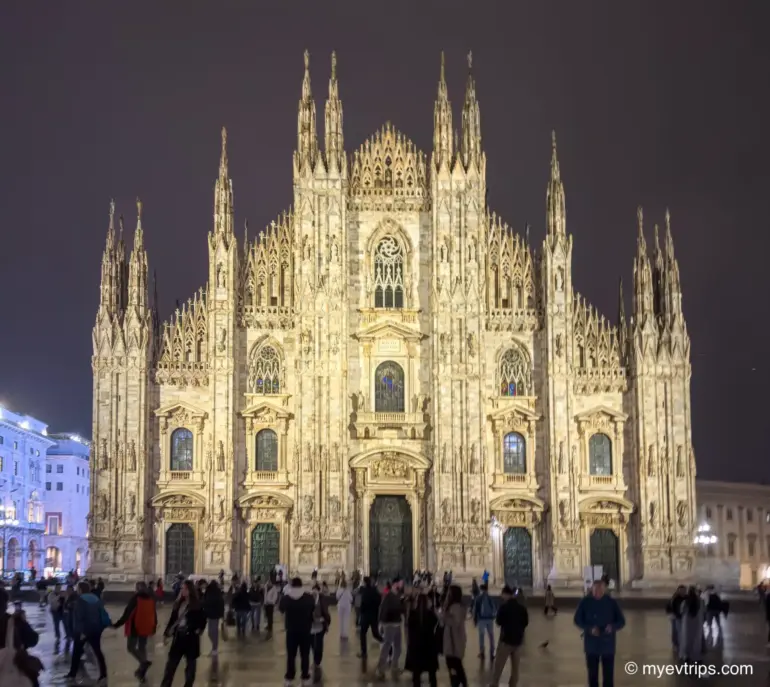
The Duomo itself is the obvious landmark, but staying nearby means being able to experience it at different moments of the day rather than treating it as a single sightseeing stop. Visitors can explore the cathedral, walk across its rooftop terraces, or return to Piazza del Duomo in the evening, when the atmosphere changes and the daytime crowds begin to thin.
A few steps away, the Galleria Vittorio Emanuele II connects the Duomo with Piazza della Scala and combines historic architecture with some of the city’s most recognizable luxury boutiques, cafés, and restaurants. La Scala is just beyond it, making it easy to combine sightseeing, dinner, and a performance without relying on taxis or public transport.
The area is equally strong for art and culture. Palazzo Reale regularly hosts major exhibitions, while Museo del Novecento houses one of the city’s most important collections of twentieth-century Italian art. Gallerie d’Italia, near Piazza della Scala, adds another major cultural stop within an easy walk.
Shopping is similarly accessible. La Rinascente overlooks Piazza del Duomo, while the streets surrounding the center offer everything from international brands to Italian fashion. The Quadrilatero della Moda is also within walking distance, so visitors can move easily between the historic center and Via Montenapoleone, Via della Spiga, and the surrounding luxury shopping streets.
Food is another important part of the appeal. Central Milan offers a wide range of options, from traditional cafés and pastry shops to contemporary restaurants, aperitivo spots, and fine dining. Brera is close enough to walk to for dinner, while the areas around Scala, Via Dante, and the Galleria provide plenty of alternatives without leaving the center.
This combination makes Duomo particularly effective for first-time visitors, couples, families, and travelers who want to make the most of their time in the city. A morning can move naturally from coffee to a museum, an afternoon from shopping to an exhibition, and an evening from aperitivo to dinner or a performance at La Scala, often without needing any transport at all.
Duomo station, served by both the M1 and M3 metro lines, adds further flexibility for journeys beyond the historic center. But for many days spent exploring central Milan, walking is often the most convenient option.
The area is naturally more animated than Milan’s residential districts, particularly around Piazza del Duomo itself. For many visitors, however, that energy is part of the appeal: staying here means being immersed in the city rather than commuting into it.
Brera
Brera is one of Milan’s most distinctive neighborhoods and one of the strongest alternatives to staying directly around Duomo.
Its appeal lies in atmosphere. Narrow streets, elegant historic buildings, galleries, independent boutiques, cafés, and restaurants give the neighborhood a more intimate feel than the busiest parts of the historic center.
The Pinacoteca di Brera is the district’s cultural anchor, but much of the pleasure of staying here comes from simply walking through the neighborhood. Small courtyards, quieter side streets, design stores, and traditional buildings create a strong sense of place.
Brera also remains highly central. The Duomo, Teatro alla Scala, the Quadrilatero della Moda, Castello Sforzesco, and Porta Nuova can all be reached relatively easily, making it possible to enjoy a neighborhood atmosphere without giving up access to Milan’s main attractions.
For luxury travelers who value character, dining, and a more residential feel, Brera is particularly appealing. It works well for couples and repeat visitors who want to stay in the center while experiencing a side of Milan that feels slightly less monumental and more lived-in.
Compared with Duomo, however, its strength is less about having the city’s major landmarks immediately outside the door and more about the quality of the neighborhood itself.
Quadrilatero della Moda
For travelers whose idea of Milan is closely connected to fashion, luxury retail, and international prestige, the Quadrilatero della Moda is the obvious choice.
The district is centered around Via Montenapoleone and includes Via della Spiga, Via Sant’Andrea, Via Gesù, Via Santo Spirito, and the surrounding streets. It contains one of the highest concentrations of luxury fashion houses and flagship stores in Europe.
The experience extends beyond shopping. Elegant hotels, private courtyards, refined restaurants, historic palazzi, and discreet service give the area a polished and highly exclusive atmosphere.
Its location is also extremely practical. The Duomo, Teatro alla Scala, Brera, and the historic center are all nearby, so visitors can combine fashion and sightseeing without spending much time in transit.
The Quadrilatero feels more formal and less neighborhood-oriented than Brera. It is also more specialized than Duomo: travelers generally choose it because fashion, service, and prestige are central priorities.
For visitors planning shopping appointments, luxury retail experiences, or a stay built around Milan’s fashion identity, it remains one of the city’s most distinctive addresses.
Magenta & Pagano
Magenta and Pagano offer a quieter, more residential version of Milanese luxury.
The area is known for elegant apartment buildings, tree-lined streets, larger homes, and a more relaxed pace than the central shopping and sightseeing districts. It is particularly attractive to families and travelers planning a longer stay.
Several important landmarks remain nearby. Santa Maria delle Grazie, home to Leonardo da Vinci’s The Last Supper, is one of the area’s major cultural attractions, while Castello Sforzesco and Parco Sempione are also within easy reach.
The main advantage is space and day-to-day comfort. Compared with Duomo or the Quadrilatero, the area feels less intense and more residential, which can be valuable for families with children or visitors staying in Milan for several weeks.
The trade-off is that fewer of Milan’s major attractions are immediately outside the door. For travelers who want to spend most of their time sightseeing, dining, and shopping in the historic center, a more central base may still be preferable.
Porta Nuova & Garibaldi
Porta Nuova shows a very different side of Milan.
Around Piazza Gae Aulenti, Bosco Verticale, and the surrounding business district, historic streets give way to contemporary towers, modern public spaces, offices, hotels, and newer residential buildings.
The area is particularly well suited to business travelers. Milano Porta Garibaldi provides strong rail and metro connections, while many major corporate offices are located nearby. Newer apartments and hotels often provide features such as elevators, modern layouts, security, and contemporary amenities.
BAM, the Biblioteca degli Alberi, adds a substantial green space to the district and helps soften its corporate character.
Porta Nuova is also close to Brera and Corso Como, making it easy to combine business travel with restaurants, nightlife, and shopping.
It does not offer the same historic atmosphere as Duomo or Brera, but for travelers who prefer contemporary architecture, modern infrastructure, and convenient business connections, it is one of Milan’s strongest options.
Palestro & Corso Venezia
Palestro and Corso Venezia offer a quieter and more understated form of central luxury.
Located just east of the Quadrilatero della Moda, the area combines historic palazzi, elegant residential streets, cultural institutions, and access to the Giardini Indro Montanelli.
The atmosphere is calmer than around Duomo or Via Montenapoleone, but the city center remains close. Luxury shopping, museums, restaurants, and major landmarks can still be reached easily.
This makes the area especially suitable for travelers who want classical Milanese architecture and a more residential setting without moving far from the center.
For couples and families, the combination of greenery, larger streets, and proximity to the Quadrilatero can be particularly attractive.
CityLife
CityLife is the strongest option for travelers who prefer modern residential Milan and do not need to stay in the historic center.
The district is defined by contemporary architecture, landscaped pedestrian areas, modern apartment buildings, shopping, and extensive green space. Towers designed by Arata Isozaki, Zaha Hadid, and Daniel Libeskind give the area a very different identity from Milan’s historic neighborhoods.
For families and longer stays, the advantages are practical. Newer buildings often offer elevators, larger common areas, modern amenities, and more generous residential spaces than apartments in the oldest parts of the city.
The park and pedestrian environment also make the neighborhood feel more spacious and relaxed.
Its main limitation is location. CityLife is well connected by metro, but it does not provide the immediate access to landmarks, museums, restaurants, and shopping that travelers find around Duomo, Brera, or the Quadrilatero.
For a first visit focused on discovering Milan, the historic center is usually more convenient. For longer stays where space, modernity, and residential comfort matter more, CityLife becomes a compelling alternative.
Which Milan Neighborhood Is Best for You?
For most luxury travelers visiting Milan for culture, shopping, dining, and sightseeing, Duomo, Scala, and Cordusio offer the most complete central experience. Few areas allow visitors to combine so many of the city’s defining attractions within such a compact, walkable setting.
Brera is the stronger choice for travelers who prioritize atmosphere, historic character, restaurants, and a more intimate neighborhood experience.
The Quadrilatero della Moda is best suited to visitors whose stay revolves around fashion, luxury shopping, and exclusivity.
The other districts become particularly attractive when specific priorities come into play: Magenta and Pagano for residential comfort, Porta Nuova for business and contemporary architecture, Palestro for discreet central luxury, and CityLife for modern space and longer stays.
Ultimately, the right neighborhood depends on how you want to experience Milan. But for travelers who want the city’s art, culture, shopping, food, and landmark experiences to feel immediately accessible, staying in the heart of Milan offers a clear advantage.
What say you?
Thoughts on the Best Neighborhoods to Stay in Milan?
Let’s hear it!