I’ve forgotten plenty of hotel rooms, museum names and walking routes, but meals from old trips tend to stay in my head. A bowl of pasta, a plate of grilled fish or a tiny bar where everyone seemed to know what to order can be easier to remember than another church façade.
That’s part of the fun of travelling through older European cities, where certain dishes still belong strongly to particular regions and neighbourhoods. You can spend one evening at a serious restaurant and the next standing at a crowded bar with a plate in your hand, and both can end up being equally memorable.
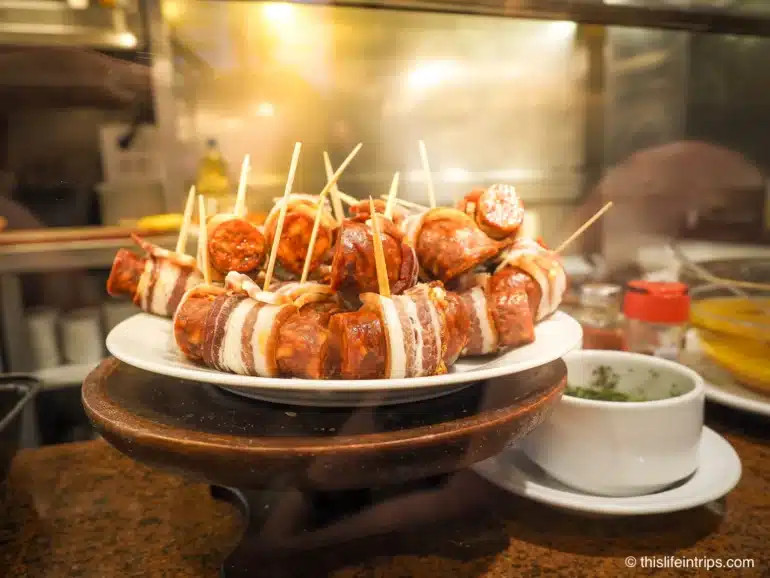
San Sebastián is a good example of a city where eating easily takes over the evening. Pintxos bars let you try a few small dishes, move on and order something completely different at the next stop. There’s no real need to settle into one restaurant for three hours when another counter is waiting a few streets away.
I’d happily build dinner around anchovies, tortilla, grilled mushrooms and one or two things I couldn’t identify until they arrived.
Bologna works differently. Here, I’d make time for a proper lunch and look for tagliatelle al ragù, tortellini in brodo or mortadella rather than trying to cover ten places in one night.
The centre is packed with food shops and market stalls, so it’s difficult to walk far without stopping for cheese, cured meat or fresh pasta. If a place is known for one particular dish, that’s usually what I’d order first.
Wine naturally becomes part of meals like these, especially once a trip moves through Italy, Spain, Portugal or Cyprus.
If you want a bottle for dinner back at an apartment, a spread of cheese and cured meat, or a meal built around grilled food, the red wine selection includes bottles from Cyprus and abroad, with grapes such as Cabernet Sauvignon, Merlot, Pinot Noir, Primitivo and Saperavi.
With both lighter and fuller-bodied styles available, it is easier to choose a bottle around the food. For travellers staying in Cyprus, having a few bottles ready can also make apartment dinners feel more relaxed after a long day out.
San Sebastián Is Built for Trying One More Thing
The easy mistake in San Sebastián is ordering too much at the first bar. Pintxos are small, but another counter is waiting nearby, and the next place may be better for seafood, mushrooms or grilled meat.
Standing at the bar with a glass in hand is normal, so I’d look at what people around me are ordering before asking for half the menu. If one place is packed, I’d give it a minute before moving on, especially when the food coming out of the kitchen looks good.
Basque cooking doesn’t always need much decoration. Anchovies, peppers, salt cod, local cheese and grilled seafood can do most of the work when the ingredients are good.
Moving between bars also lets you try a few different versions of the same ingredient without sitting down for another full meal. By the end of the night, you’ll probably have one place you want to go back to.
Bologna Makes Lunch Difficult to Rush
Bologna is the place where I’d stop pretending lunch can be squeezed between two museums. Fresh pasta deserves a bit of time, whether that means tagliatelle with ragù, tortellini in brodo or a plate of mortadella and cheese.
The local ragù is usually served with tagliatelle rather than spaghetti, which is worth remembering if most of your experience with “Bolognese” comes from restaurants elsewhere. Once you try the local version, the difference is easy to notice.
A market stop is useful too, especially if you’re staying somewhere with a kitchen. Pick up fresh bread, cheese, cured meat, tomatoes or whatever fruit looks good that day, and dinner is already halfway sorted.
It’s also a chance to see what people actually buy locally rather than only what appears on restaurant menus. I’d leave some room in the bag.
Porto Is More Than Port
Porto has a strong wine identity, but the food is just as good a reason to stay for a few days.
Cured ham, local cheese, olives and bread can fill a long lunch, while seafood, grilled fish and richer dishes like francesinha show a very different side of the city. Mercado do Bolhão is worth visiting if you like seeing the ingredients before they turn up on a plate. It’s also handy for picking up a few things to eat later.
I’d spend at least one meal away from the busiest stretch of Ribeira. Walk a few streets uphill and smaller places start appearing, often with shorter menus and fewer tables aimed mainly at visitors.
Porto is compact enough that changing neighbourhoods for dinner doesn’t take much effort. The hills are another matter, especially after a heavy lunch.
Lyon Still Knows How to Do a Serious Meal
Lyon earns its reputation for rich food quickly. Traditional bouchons serve pâté, sausages, quenelles and slow-cooked meat, so I wouldn’t plan a second large meal a few hours later.
One proper bouchon lunch is plenty, especially if you start with charcuterie and keep ordering. Bread, cheese, fruit or something small from a market can take care of the evening.
Wine lists can be interesting here too, especially with major wine regions nearby.
If most of the labels are unfamiliar, tell the server what you’re eating, whether you want something light or full and roughly how much you want to spend. A lighter red can work well with mushrooms, duck or tomato-based pasta, while lamb and grilled beef can take something fuller.
You’ll usually get a better bottle that way than by picking a name at random.
Don’t Overthink the Bottle
A long restaurant wine list can be difficult when most of the grapes and producers are unfamiliar.
Start with the food and the kind of red you normally enjoy, then ask for help if you need it. If several people are sharing different dishes, I’d choose one bottle that works reasonably well with most of them rather than trying to match every plate separately.
Nobody at the table is going to complain because one side dish isn’t an exact pairing.
The same applies when you’re buying a bottle yourself. Mushrooms, roast poultry and many pasta dishes are usually comfortable with lighter reds, while grilled lamb or beef can take something with more tannin and body.
If you like Pinot Noir, Saperavi or Primitivo, start there and look at what’s on the menu. Familiar preferences are useful when the shelf is full of bottles you haven’t tried before.
Tbilisi Brings a Different Kind of Table
Tbilisi feels very different after a few days of Italian, Spanish or French food.
Georgian meals often arrive as a table full of dishes, with khachapuri, khinkali, grilled meat, aubergine with walnut, herbs and pickles all appearing together. It’s extremely easy to order too much, particularly when several people are sharing.
Usually you realise this only when another plate arrives and there’s nowhere left to put it.
Traditional qvevri winemaking is recognised by UNESCO as intangible cultural heritage. Large earthenware vessels are used for making, ageing and storing wine, and the method is still practised around Georgia.
If you visit a wine bar in Tbilisi, ask if they have qvevri wines and try one alongside the food rather than expecting every bottle to resemble something from France or Italy. The UNESCO entry on qvevri winemaking gives a useful overview of how the method works.
A Quick Look at Five Food Cities
Each city has its own pace when it comes to eating. San Sebastián works well for moving between bars, while Bologna rewards a long lunch. Porto has plenty of casual seafood, Lyon leans towards richer dishes and Tbilisi usually puts several plates on the table at once.
| Destination | What to Try | Best Time for It |
|---|---|---|
| San Sebastián | Pintxos, anchovies, grilled seafood, tortilla | Evening bar hopping |
| Bologna | Tagliatelle al ragù, tortellini, mortadella | Long lunch |
| Porto | Grilled fish, seafood, francesinha, local cheese | Lunch or early dinner |
| Lyon | Quenelles, charcuterie, sausages, slow-cooked meat | Proper midday meal |
| Tbilisi | Khinkali, khachapuri, grilled meat, aubergine with walnut | Shared dinner |
What I Usually Look for at a Food Market
Markets are useful almost everywhere, but I don’t try to buy everything that looks interesting. A few things travel well, while others are better eaten the same day.
If I’m staying somewhere with a kitchen or even just a fridge, these are usually the first things I look for:
- Local cheese that can be eaten that day
- Cured meat or sausage
- Bread from a nearby bakery
- Seasonal fruit and tomatoes
- Tinned fish or seafood
- Olives, pickles and preserves
- Spices or packaged sweets to take home
It’s also worth checking what other people are buying. If the same cheese, fish or vegetable turns up on several stalls, there’s a good chance you’ll see it again on restaurant menus later.
Leave Room for the Unplanned Meal
Restaurant lists are useful, especially in cities where popular places fill up several days ahead, but I wouldn’t book every breakfast, lunch and dinner before arriving.
Pick one or two places you really want to try and leave some space around them. That works particularly well in San Sebastián, Porto and Bologna, where you can walk for ten minutes and find another bar, market or small restaurant.
Sometimes a busy place with a short menu is worth trying simply because you like the look of what’s coming out of the kitchen.
Some dinners begin with nothing more complicated than stopping somewhere because you’re hungry. You see what the next table ordered, ask for the same thing and end up with a dish you wouldn’t have searched for beforehand.
Keep at least one evening open for that. A food trip is more fun when there’s still room to change your mind.
What say you?
Thoughts on these Old World Dining Destinations?
Let’s hear it!