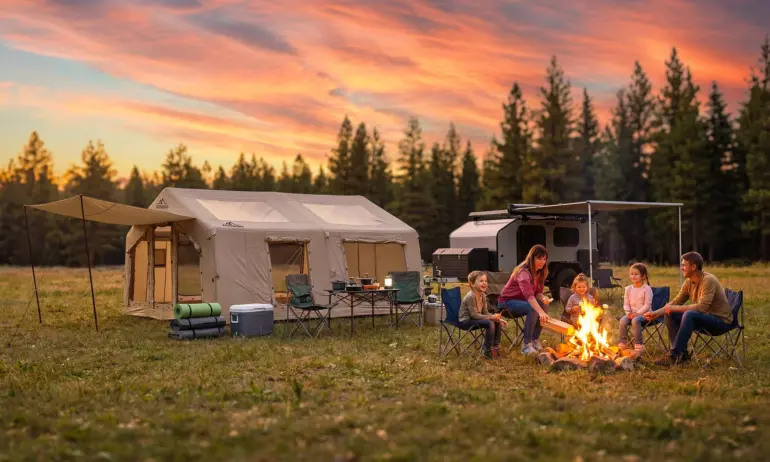
A small campervan road trip requires careful choices about equipment, storage, cooking appliances, and electricity. The most practical approach is to prioritize essential supplies, select multifunctional gear that suits the vehicle’s layout, and secure everything properly before driving.
Compact appliances should match available space and power, while battery capacity should reflect daily energy consumption and opportunities to recharge. Planning these details beforehand makes a smaller campervan more comfortable without compromising safety or convenience.
Multifunctional Gear: Choose Items That Earn Their Space
Multifunctional equipment can reduce clutter, but only when it genuinely replaces several separate items. The best choices depend on how frequently something is used, its storage dimensions, and whether it suits the campervan’s interior layout.
Prioritize Essentials Before Optional Conveniences
Begin with necessary equipment for sleeping, cooking, drinking water, hygiene, safety, and vehicle maintenance.
Once these items have designated storage spaces, consider additional products that serve multiple purposes.
Practical examples include:
- Foldable dining table: Provides eating or working space without permanently obstructing the walkway.
- Multipurpose cutting board: Can also serve as a food preparation or serving surface.
- Compact multi-tool: Handles minor adjustments without requiring a large toolbox.
- Collapsible food containers: Reduce storage requirements when empty.
- Removable-handle cleaning tools: Fit more easily inside narrow cupboards.
Evaluate Equipment Before Packing
Before purchasing multifunctional gear, consider whether each item replaces something already owned. Measure its dimensions when stored and fully opened.
A folding table, for example, offers limited value if it blocks access to the refrigerator or sleeping area. Prioritize durable materials, straightforward cleaning, and equipment that remains secure during vehicle movement.
Storage Strategies for a Small Campervan
Effective campervan storage should improve accessibility while keeping weight distributed appropriately. Using every available compartment is less important than ensuring equipment remains organized and secure.
Make Vertical Storage More Useful
Overhead cupboards, cabinet doors, and unused wall sections offer opportunities for compact organization. Small shelf inserts can separate lightweight items and improve access within tall cupboards. However, they do not necessarily double usable storage capacity because their effectiveness depends on internal dimensions and stored objects.
Hanging organizers work particularly well behind seats or inside cupboard doors, provided they do not interfere with access, visibility, or vehicle controls. Avoid placing heavy cookware or unsecured equipment on high shelves.
Organize Under-Bed and Lower Compartments
Under-bed spaces often accommodate larger belongings, including spare clothing, bedding, and camping equipment. Use appropriately sized bins to separate categories and prevent smaller objects from shifting. Choose containers with secure lids and handles that make them easy to retrieve.
Heavier items should generally be positioned low and secured appropriately, while considering the vehicle manufacturer’s loading instructions and axle-weight limits. The National Highway Traffic Safety Administration emphasizes securing cargo so it cannot shift or become hazardous during transportation.
Check Storage Security Before Driving
Storage solutions must withstand sudden braking and vehicle movement.
Use suitable cabinet latches, cargo restraints, and manufacturer-approved fixing points. Confirm that drawers remain closed and loose equipment cannot become airborne during an abrupt stop.
Keep emergency supplies, essential documents, and frequently used items accessible without obstructing doors or exits.
Compact Appliances: Compare Space, Power, and Practicality
Choosing campervan appliances involves balancing convenience against installation space, electricity consumption, fuel requirements, and maintenance.
An appliance that works well in a larger motorhome may be impractical inside a compact vehicle.
Compare Common Campervan Appliances
| Appliance | Space requirements | Power or fuel needs | Main limitation |
| Portable camping stove | Small storage compartment | Compatible cooking fuel | Requires approved ventilation and safe operating conditions |
| Electric kettle | Limited counter space | Relatively high electrical power | May exceed small inverter capacity |
| 12V compressor fridge | Dedicated ventilated compartment | Continuous electrical availability | Requires a suitable battery and charging plan |
| Insulated cooler | Floor or storage space | Ice or frozen packs | Cooling depends on replenishing ice |
| Rechargeable blender | Drawer or small cupboard | Periodic USB charging | Limited capacity and motor performance |
Choose Appliances Around Actual Cooking Habits
Travelers preparing simple meals may need only a suitable stove, cookware, and reliable food storage.
An electric kettle might be convenient when campsite hookups are available, but heating water electrically can place considerable demand on a small battery system.
A compressor refrigerator provides controlled cooling when adequately powered. An insulated cooler avoids continuous electrical consumption but requires regular temperature checks and sufficient ice.
According to FoodSafety.gov, perishable food stored in coolers should remain at or below 40°F (4°C). Use a thermometer, replenish ice when necessary, and keep the cooler closed as much as possible.
Consider Storage and Installation Requirements
Measure the appliance’s operating footprint, not merely its external dimensions. A refrigerator may require ventilation clearance, while a stove needs a safe cooking location and appropriate fuel storage.
Ensure that electrical appliances are compatible with the campervan’s outlets, wiring, and inverter capacity. Follow manufacturer instructions for installation and operation.
Choosing a Small Lithium Battery for a Compact Electrical Setup
A campervan battery should be selected according to expected electricity consumption, usable storage capacity, and the time available between charging opportunities. Trip length alone cannot determine the appropriate battery size.
Calculate Daily Electricity Consumption
Start by listing electrical appliances and estimating how long each operates daily.
Consider this hypothetical setup:
| Appliance | Assumed operation | Daily consumption |
| 12V compressor fridge | 40W for 8 hours | 320Wh |
| LED lighting | 10W for 4 hours | 40Wh |
| Phone and device charging | Combined daily estimate | 60Wh |
| Water pump and miscellaneous equipment | Combined daily estimate | 40Wh |
| Total daily demand | 460Wh |
Match Battery Capacity to the Energy Budget
A nominal 12.8V, 100Ah lithium iron phosphate (LiFePO4) battery stores approximately:
12.8V × 100Ah = 1,280Wh
Assume that 80% of rated capacity is available for planning, allowing for reserve capacity and system losses:
1,280Wh × 0.80 = 1,024Wh
At the estimated daily demand of 460Wh:
1,024Wh ÷ 460Wh = approximately 2.2 days
Compare Battery Size, Weight, and Installation Needs
A small lithium battery may offer meaningful weight savings compared with certain lead-acid alternatives, but specifications differ between manufacturers and models.
For example, a typical 12.8V, 100Ah lithium iron phosphate battery weighs approximately 14kg, compared with approximately 32kg for a comparable 12V AGM deep-cycle battery. Actual figures differ between manufacturers and models.
Dimensions also matter. Before installation, measure the available compartment and confirm mounting orientation, cable clearance, and ventilation requirements.
Battery charging time depends on the initial charge level, charging current, charger limitations, and battery specifications. A smaller battery does not automatically charge faster under every setup.
Follow the specific battery manufacturer’s requirements, including secure mounting, ventilation clearances, battery management, fusing, and connection instructions.
Final Checklist Before Departure
A short inspection can prevent storage problems and unexpected equipment failures once the journey begins.
| Essential check | What to confirm |
| Storage security | Drawers, bins, and loose equipment are restrained |
| Vehicle loading | Heavy items are secured and weight limits respected |
| Water and supplies | Drinking water, food, and essential equipment are available |
| Cooking appliances | Equipment is stowed, and fuel connections are secure |
| Battery charge | Remaining usable energy matches expected consumption |
| Charging access | Planned campsite, vehicle, or solar charging is available |
| Emergency equipment | First-aid supplies and safety equipment are accessible |
Conclusion
Making the most of a small campervan requires practical equipment choices, accessible storage, and appliances that suit the available space. Multifunctional gear can reduce clutter, while properly secured belongings improve safety during travel.
Reliable electricity also depends on calculating actual consumption rather than choosing battery capacity solely according to trip length. With essential supplies organized, equipment safely stowed, and charging opportunities planned, travelers can enjoy a functional campervan without unnecessary compromises.
What say you?
Thoughts on Small Campervan Road Trip Essentials?
Let’s hear it!