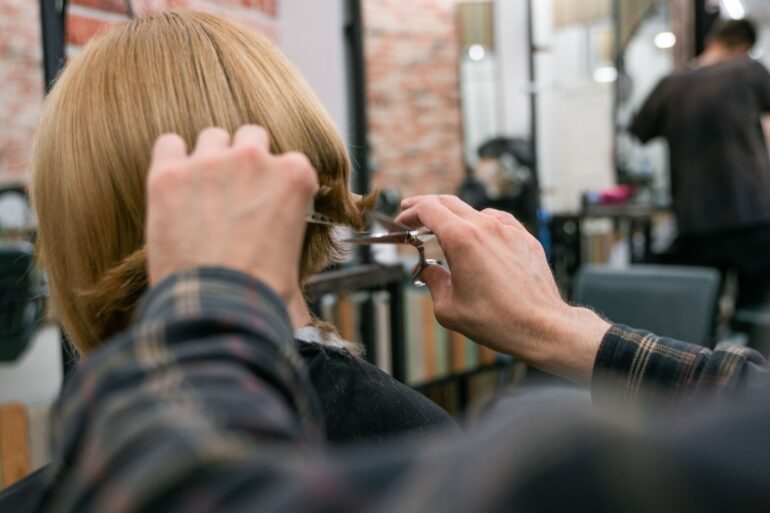
There is a specific kind of panic that hits about four minutes into a haircut in a foreign city. The clippers are already moving. You have said “short” and the barber has said something back. Neither of you is certain what the other meant.
I’ve had good haircuts abroad and I’ve had one that required a hat for eleven days. The difference was never the barber’s skill. It was always the fifteen minutes of prep I did or didn’t do beforehand.
Long trips make this unavoidable. Six weeks in, you either sort it out on the road or you come home looking like you lost a bet. So here’s how to stop rolling the dice.
Why This Goes Wrong More Often Than It Should
It’s rarely incompetence. It’s three gaps that have nothing to do with talent.
The vocabulary gap
“Short on the sides” is not a measurement. It’s a cultural assumption, and it does not travel. Neither do “trim,” “tidy up,” or the universally dangerous “just take a little off.”
Number systems for clipper guards differ too. A number two in one country is not a number two everywhere.
The water gap
This one nobody warns you about. Your hair behaves differently in a new city before anyone touches it, because the water is different.
The USGS classifies water as soft below 60 mg/L of calcium carbonate and very hard above 180 mg/L. Move between those extremes and your hair goes flat, or gritty, or refuses to hold anything.
So the cut you’re unhappy with on day three may not be the cut. It may be the shower.
The standards gap
Licensing varies enormously by country. In the US, BLS notes that every state requires barbers, hairstylists, and cosmetologists to hold a license, typically after a state-approved program and an exam.
Elsewhere the rules range from strict to essentially nonexistent. That doesn’t mean unregulated equals bad. It means the shopfront tells you less than you think.
How to Find a Good Salon Nearby Without Guessing
Star ratings are close to useless here. Every salon has four-point-something, and tourists rate friendliness rather than the haircut.
Start with the products, not the reviews
This is my favorite shortcut. Professional product lines are picky about who stocks them, and a salon that has invested in training on a serious line is usually a salon that trains on everything else too.
Davines, the Italian haircare brand, keeps a locator for its partner salons in cities worldwide, and running that against the neighborhood you’re staying in is a fast way to find a salon nearby that’s working at a standard you’ll recognize.
It isn’t a guarantee of a great cut. It’s a filter, and filters are what you need when you know nothing about a city.
Read the reviews in the local language
Switch your review search to the local language and the tone changes completely. Locals complain about specifics. Tourists complain about parking.
Judge the neighborhood, not the city
Go one or two districts out from the tourist core. Prices drop, the clientele is regular, and the person cutting your hair is building a reputation rather than serving a queue that will never return.
The Conversation, and How to Avoid Having It
The goal is to communicate without relying on shared vocabulary at all.
Bring three photos, not one
One photo shows a hairstyle. Three photos show a pattern, and a pattern is a brief. Include one shot from behind, which is the angle you can never describe and the one that goes wrong most often.
Take them on a good hair day at home, before you leave.
Learn four words, not forty
Short, shorter, same, and stop. That’s the entire survival kit. If you’re traveling Spanish-speaking countries, my guide to essential Spanish phrases every traveler should know covers the rest of the useful ones.
Say the words early rather than politely waiting until the damage is done.
Ask for less than you want
Always. You can go shorter tomorrow. You cannot go longer.
Ask for half what you think you need, then decide. A barber who is happy to do a second pass is a barber you’ll go back to.
Two Things I Wouldn’t Book Abroad
Haircuts are low risk. Chemistry is not.
Color you can’t undo
Dye reactions are real and they don’t care that you’re on vacation. The FDA notes that cosmetic allergic reactions range from rashes and swelling through to anaphylaxis, and that patch testing is how allergens get identified.
A patch test needs time you don’t have on a four-night stop. Save color for a salon that knows your history.
Chemical smoothing
This is the one I’d genuinely skip. OSHA reports that many hair smoothing products contain formaldehyde or release it during use, and that its air testing found levels above the short-term exposure limit in three salons.
Ventilation standards vary wildly between countries. Your two-hour treatment is also somebody’s eight-hour workday.
The Ten-Minute Cheat Sheet
Do this the night before and you’ll be fine:
- Screenshot three photos, including one from behind.
- Search salons in the local language, one district out from the center.
- Cross-check against a professional product locator.
- Book ahead rather than walking in, so you get a stylist rather than whoever’s free.
- Learn your four words.
- Ask for half. Decide after.
- Skip color and chemical treatments unless you’re staying two weeks or more.
Final Thoughts
A haircut is one of the few times on a trip when you hand someone else control of how you look for the next month. It deserves more than picking the closest door with a striped pole outside.
Fifteen minutes of prep turns it from a gamble into a genuinely good travel experience. Some of my favorite conversations on the road have happened in a barber’s chair, mostly conducted in gestures.
Just bring the photos. Always bring the photos.
Related Reads
- Instagramming Tokyo – Sushi, Playing in Traffic, and Men in Diapers Shaking Babies
- Things to Do in Medellin: The Perfect 7 Day Medellin Itinerary
- 3 Days in Porto – What to See, Do, Eat and Drink
What say you?
Thoughts on Getting a Haircut While Traveling?
Let’s hear it!